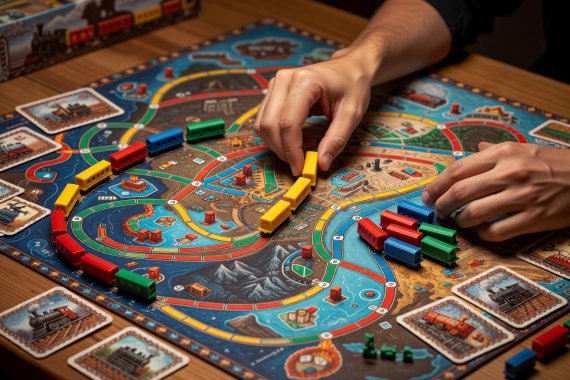
Modern Board Games
From tile-placement in Carcassonne to continental rail-building in Ticket to Ride, discover systems that reward thoughtful planning without bogging down the room.
Inspect Board Games →Every memorable indoor gathering begins with an honest audit of who sits down to play: their tolerance for reading, their patience with rulebooks, and how much physical table space you can spare.
We look past marketing noise and retail hype to examine how genuine modern classics and contemporary titles perform under real dining room lighting. When four people pull up chairs after dinner, the winning game is rarely the one with the thickest manual or the most plastic figurines.
It is the game that communicates its first decision within five minutes, keeps everyone invested even during other players' turns, and packs back into its box without turning cleanup into a chore.
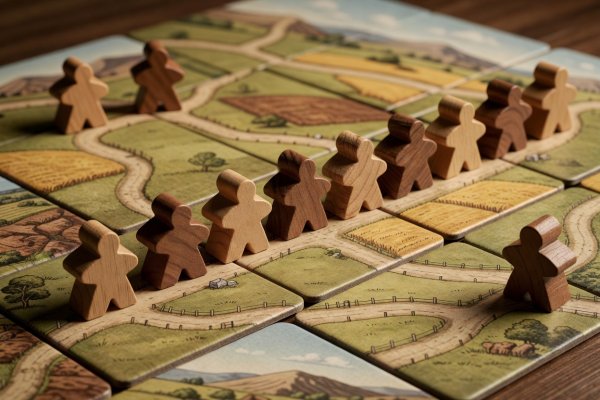
Different evenings demand different rhythms. Choose the format that best accommodates your players’ energy level and evening schedule.
From tile-placement in Carcassonne to continental rail-building in Ticket to Ride, discover systems that reward thoughtful planning without bogging down the room.
Inspect Board Games →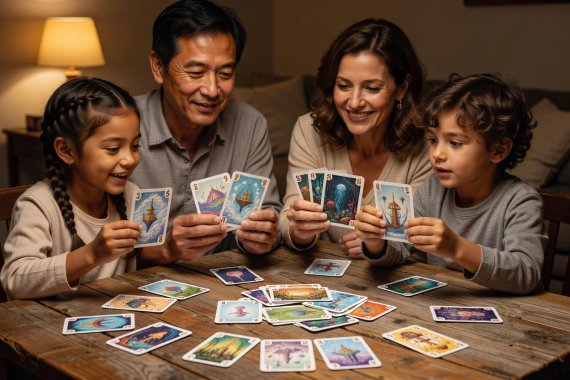
Games where grandparents, parents, and eight-year-olds compete on level ground through visual deduction, gentle bluffs, and intuitive mechanics like Dixit and Just One.
Inspect Family Play →
Parlour guessing, physical dexterity with wire balancing, and cooperative word-association games that thrive when dining table space is tight.
Inspect Indoor Ideas →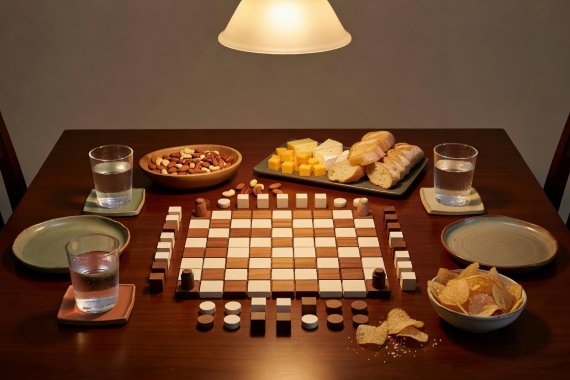
The subtle craft of lighting, teachable rules rundowns, snack separation, and graceful wrap-ups that leave visitors wanting another session next month.
Inspect Game Night →A direct look at tactile components, downtime between turns, and how rulebooks treat newcomer hesitation.
| Title | Primary Engine | Learning Curve | Reading Demand | Downtime Factor | Ideal Table Size |
|---|---|---|---|---|---|
| Catan (Klaus Teuber) | Resource trading & route placement | 12–15 min teach | Low (icon cards) | Moderate (active trading) | Medium (4 hex sides) |
| Ticket to Ride (Alan R. Moon) | Set collection & secret route claims | 6–8 min teach | Very low (city names) | Minimal (swift single actions) | Large flat table |
| Carcassonne (Klaus-Jürgen Wrede) | Tile placement & meeple positioning | 5 min teach | None (visual terrain) | Low (planning on rival turns) | Modular (expands freely) |
| Azul (Michael Kiesling) | Pattern drafting & tile placement | 7 min teach | None (purely symbolic) | Very low (shared factory draft) | Compact individual boards |
| Codenames (Vlaada Chvátil) | Clue association & deduction | 4 min teach | Moderate (isolated words) | Moderate (spymaster pause) | Any coffee or dining table |
Simple answers to the hurdles every home entertainer faces when organizing play across different age groups.
A genuinely family-friendly title features transparent rules that children can comprehend, paired with deep emergent choices that keep adults strategically engaged. Games like Carcassonne or Dixit avoid insulting anyone's intelligence while requiring zero complex arithmetic.
Choose titles with simultaneous action (like 7 Wonders), limited shared table commentary (such as Just One), or personal puzzle construction (such as Azul). These structures prevent "quarterbacking" by naturally keeping decision rights in each player's individual hands.
Four players represents the historic sweet spot for tabletop board play. It balances conversation, minimizes downtime between turns, and fits comfortably around standard four-person dining arrangements without requiring furniture rearrangement.
We do not accept review copies with promotional strings, nor do we run affiliate storefront links.
Jollyjinxniftycr exists to document the mechanical and social dynamics of indoor entertainment. When evaluating games, our reviewers measure component durability, rule clarity on page one, table footprint, and the emotional temperature left in the room after the final score is tallied.
Whether analyzing modern German-style euro classics or minimalist card games, our documentation focuses on lasting utility rather than temporary novelty.
Use our drafting tool to formulate specific questions regarding group dynamics, room constraints, or teachable card setups.