Topic Playbook — 01

Beyond the Familiar Box

Moving past roll-and-move childhood games into the elegant architecture of contemporary Eurogames and modern drafting.

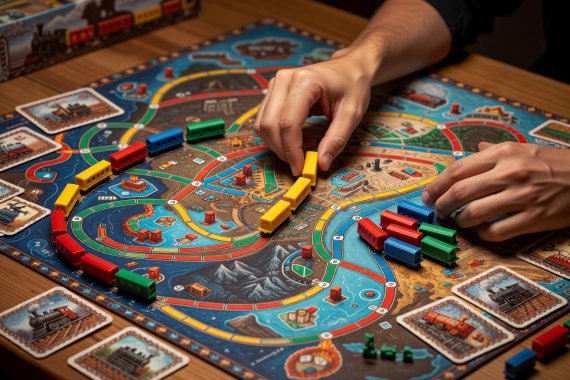
Player hands positioning plastic miniature carriages on a brightly illustrated train route map
Mechanical Clarity

The Joy of Agency

For decades, household board games relied almost entirely on roll-and-move mechanics where players surrendered control to the dice. If you rolled poorly, you landed in penalty squares or lost your turn. Modern tabletop design completely discarded that punishment loop.

In modern systems, dice or card draws supply opportunities rather than mandates. Even when chance deals an awkward hand, the player retains the agency to adapt, negotiate, pivot, or preserve resources for a subsequent turn.

Three Design Pillars That Transformed the Table

Pillar One

No Early Player Elimination

Historic board games like Monopoly or Risk regularly forced losing players to sit on the sidelines for two hours while others finished. Modern tabletop classics ensure every participant stays at the table until the final scoring phase, preserving household goodwill.

Pillar Two

Meaningful, Swift Decisions

In games like Ticket to Ride or Azul, a player's turn often lasts less than twenty seconds: draw two colored cards, claim a track, or draft matching tiles. Fast turn rotation stops players from checking their phones and keeps table engagement high.

Pillar Three

Tangible Spatial Architecture

From placing landscape tiles in Carcassonne to drafting mosaic pieces in Azul, players physically build a collective visual artifact. Even when you do not score first, you look down at a shared creation constructed over forty-five minutes of quiet concentration.

Case Studies in Table Chemistry

1. Catan: Negotiation and Resource Scarcity

Designed by Klaus Teuber in 1995, Catan demonstrated that trade negotiations could replace hostile attacks. Players who possess surplus wood must bargain with rivals who control brick. Because trade requires two consenting parties, aggressive bullying yields fewer trades, naturally rewarding diplomatic manners at the table.

2. Wingspan: Engine-Building and Organic Pacing

Elizabeth Hargrave's Wingspan replaced combative territory control with habitat synergy. Players build personal food and bird sanctuaries, quietly optimizing combinations without threatening each other’s physical board. This structure suits mixed households where direct confrontation causes stress.

3. The Crew: Cooperative Precision Under Silence

Thomas Sing's trick-taking game turns classic card play into a silent cooperative mission. Players cannot speak about their cards, forcing them to observe subtle discards and timing cues. It teaches discipline, mutual trust, and attentive focus across four players.

Looking Ahead

Choosing for Your Space

Before purchasing any modern board game, check the unboxed footprint. A game like Scythe or Gloomhaven requires double the surface area of a standard kitchen table, whereas Azul or Carcassonne comfortably leaves room for tea mugs, coasters, and elbows.

Explore games tuned specifically for all generations →